
'You have seen the retrenchments by big corporates in the IT industry because they are not getting enough offers.' 'MSMEs in the manufacturing sector are really struggling. They do not know what to do. They are not able to predict what will happen tomorrow.'

Indian equity benchmark indices Sensex and Nifty experienced a significant tumble in early trade, with the Sensex tanking nearly 700 points, driven by uncertainty surrounding US-Iran negotiations, a fresh spike in crude oil prices, and persistent foreign fund outflows.

Commercial banks in India recorded their highest credit growth in two years, accelerating to 18.6 per cent year-on-year by June 27, while also mobilising nearly 7 trillion in deposits, marking the third-highest fortnightly deposit growth in 29 years.

Torrent Pharma has emerged as a top sectoral pick for brokerages, driven by healthy growth in India revenues and improved gross margins, leading to a 44 per cent stock return over the past year.

'Even last year, when India bought gold, the physical quantity was much less than the previous years.'

Zee Entertainment Enterprises Ltd (ZEEL) has announced an eight-year partnership with FIFA to broadcast all its matches, including the World Cup 2026, in the Indian market. The deal includes 39 FIFA global football events, with live coverage available on ZEEL's sports network and streaming platform ZEE5.

Indian benchmark indices Sensex and Nifty traded lower amid volatile trends, influenced by escalating geopolitical uncertainties in West Asia and fresh outflows from Foreign Institutional Investors (FIIs).

Skyroot Aerospace is set to launch the maiden test flight of its orbital-class rocket, Vikram-1, from SDSC-SHAR on July 18, marking a significant milestone for India's private sector in the global launch business.

SBI Funds Management Ltd. is set to list on stock exchanges next week following its Rs 11,692 crore Initial Public Offering (IPO), which involves an Offer for Sale (OFS) of a 10 per cent stake by SBI and Amundi.

Accenture's revised annual revenue growth forecast and weaker-than-expected fourth-quarter guidance have sent shockwaves through the Indian IT sector, causing major IT stocks and the Nifty IT index to tumble significantly.

Rockwell Automation's CEO Blake Moret highlights India as the centrepiece of the company's Asian growth strategy, detailing its four-decade presence, significant employee base, and support for the 'Make in India' initiative. The company sees major opportunities in pharmaceuticals, automotive, food and beverage, and consumer products, with AI playing a crucial role in simplifying industrial automation and boosting productivity for Indian manufacturers, including MSMEs.

...exceeding their 49,340 crore equity selloff.
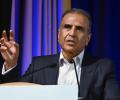
Bharti Airtel is strategically shifting its focus towards data centres, cloud services, and financial services as key drivers for its next phase of growth, leveraging significant past investments in digital infrastructure, as outlined by Chairman Sunil Mittal in the company's Annual Report for 2025-26.

A new report by Google and Deloitte projects India's e-commerce market will nearly triple to USD 250 billion by 2030, driven by Gen Z shoppers, quick commerce expansion, and AI.

Jamco Interiors, a global supplier of aircraft cabin systems, has opened a Centre of Excellence (COE) in Pune. This strategic move aims to meet the increasing demand for advanced cabin interiors in India's rapidly growing commercial aviation market and leverage local engineering talent for global aerospace programmes.

Dubai-based Danube Group plans to launch projects with a combined sales potential of approximately $4 billion in fiscal year 2026-27 (FY27), adopting a more selective approach to new developments as the Emirati property market enters a correction phase.

Adani Properties has emerged as the largest value creator in the 2026 Grohe-Hurun India Real Estate 150, adding Rs 38,000 crore in valuation to become India's fourth-most valuable real estate company, with its valuation rising 72.5 per cent year-on-year to Rs 90,400 crore.

Divya Nair shares the recipe for the perfectly-cooked salmon to be served with imperfect-looking mushroom pt and mashed potatoes, cooked with lots of love.

A new report by EY-Parthenon and CREDAI indicates that Generative AI (GenAI) could inject USD 14-17 billion into India's real estate economy over the next seven years. The technology is expected to significantly enhance operational efficiency, boost sales velocity by 30-50 per cent, and accelerate product launches, offering competitive differentiation and improved customer experiences for developers.

Two days after a 36-day student agitation concluded at Jantar Mantar, the iconic protest site in New Delhi is already witnessing new demonstrations, including calls for Gorkhaland and women's reservation, alongside curious visitors documenting the aftermath.
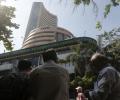
The BSE benchmark traded 44.43 points up at 76,521.93, and the Nifty quoted 17.20 points higher at 24,048.85. Track Stock markets on May 26.

FSN E-Commerce Ventures (Nykaa) reported nearly 30 per cent year-on-year revenue growth in Q1FY27, marking its highest revenue growth in 13 quarters, primarily driven by accelerated expansion in its fashion segment.

Hospital stocks have emerged as a strong theme in 2026, outperforming benchmark indices due to robust earnings growth, improved occupancy, higher average revenue per occupied bed, and aggressive expansion plans by major chains.

Indian stock markets are expected to remain highly sensitive to geopolitical developments, particularly the US-Iran situation, and crude oil prices this week, with analysts also highlighting the influence of the rupee-dollar trend, foreign investor activity, and upcoming inflation data.

'Midcaps and smallcaps are the 'go-to segments' for retail investors.'

Gold prices in the national capital fell by Rs 600 to Rs 1.64 lakh per 10 grams, influenced by tentative progress in US-Iran negotiations, which reduced demand for precious metals. However, unresolved tensions surrounding the Strait of Hormuz continue to keep traders cautious.

ICICI Bank, India's second-largest private-sector lender, is set to raise approximately $500 million through an overseas dollar bond issuance, marking its first such move in nearly a decade. This fundraising effort will utilise the Reserve Bank of India's (RBI) concessional swap window, a facility designed to reduce hedging costs for foreign currency borrowings.

The appointment comes as Agnikul prepares for Mission 02, a flight that will attempt, for the first time on Indian soil, the recovery of an orbital-class rocket booster and the extension of a rocket's upper stage into an on-orbit platform.

Indian equity benchmark indices Sensex and Nifty rebounded in early trade, driven by buying in blue-chip stocks and a positive trend in Asian markets, with domestic institutional investors providing crucial support.

The Calcutta High Court has strongly criticised travelling ticket examiners (TTEs) for illegally selling unoccupied berths, likening it to 'selling vegetables in a market', after such an incident led to the death of a drugged theft victim on a train.
Indian equity markets experienced a significant decline in early trade, with the BSE Sensex and NSE Nifty dropping, as escalating geopolitical tensions in West Asia and a surge in global oil prices dampened investor sentiment. Track Sensex, Nifty50 movement and key market drivers for May 8, 2026.

Dr Lovi Raj Gupta, pro vice-chancellor, Lovely Professional University, explains how aspiring professionals can equip themselves for a competitive AI-driven job market.

India's hydropower generation has been significantly constrained in July due to the El Nio effect, which has weakened the southwest monsoon and reduced reservoir levels. This decline, following a 21 per cent year-on-year drop in June 2026, is forcing greater reliance on coal generation and straining grid flexibility amidst rising power demand.

Indian benchmark equity indices, Sensex and Nifty, extended their winning streak for a third consecutive day, driven by a rally in IT stocks and global cues suggesting a more accommodative monetary policy after softer-than-expected US jobs data.

AI-driven job disruption, rising debt, shrinking savings and a changing global economy are reshaping India's middle class. Saurabh Mukherjea discusses jobs, entrepreneurship, investing and the future of India's economic growth on THE REDIFF PODCAST.

India's domestic pharmaceutical market recorded its highest value growth in five quarters during Q4 FY26, driven primarily by pricing and an early indication of volume recovery, with a significant structural shift towards chronic and sub-chronic therapies.

The vaccine has been cleared for use in individuals aged 4 to 60 years and can be administered irrespective of whether the taker has had dengue before, eliminating the need for pre-vaccination screening.

Modi's comments on underlining the importance of ensuring the safety of seafarers came against the backdrop of growing anger in India over the killing of the three Indian crew members in a US military attack on a merchant ship off the coast of Oman last week.

'After that the burdens of an ageing population will be upon us, and the share of working age population will shrink.'

'They talked bad about our leaders. They said India was a dead economy. They were not sensitive to the Indian psyche.'
